Wednesday, June 25, 2014

Pope Excommunicates Mafioso


Evil.

Excommunication.

In a statement made on June 21st, Pope Francis issued strong words for people who choose to make a conscious decision to follow the ways of money, sin, and exploitation. The Pope is specifically quoted as saying, “Those who follow the path of evil, like the Mafiosi do, are not in communion with God; they are excommunicated!”

The Pope was speaking to tens of thousands of people in the southern region of Calabria when he issued what is the most severe ecclesiastical penalty within the Catholic Church: excommunication.

But what exactly does it mean to be excommunicated?

And how is it enforced?

Read more  here


Friday, June 13, 2014

Two Days Left!

There are two days left on our great summer offering of All Things Girl: Truth for Teens. Don't miss out!

We're excited at Bezalel Books to offer All Things Girl: Truth for Teens--one of our most popular teen books--at an amazing price of .99 on Kindle to kick start summer for our precious Catholic teens!

As one Amazon reviewer wrote: All Things Girl is jam-packed with Catholic girl awesomeness and we think you will agree!

Contributors include best-selling author Peggy Bowes and the effervescent Heather Renshaw.  

So for this week only we are offering "Catholic girl awesomeness" for the special Catholic teen in your life!

Tuesday, June 10, 2014

All Things Girl Just .99 on Kindle!

School's out and it is time for sun and fun! 

We're excited at Bezalel Books to offer All Things Girl: Truth for Teens--one of our most popular teen books--at an amazing price of .99 on Kindle.

As one Amazon reviewer wrote: All Things Girl is jam-packed with Catholic girl awesomeness and we think you will agree!

Contributors include best-selling author Peggy Bowes and the effervescent Heather Renshaw.  

So for this week only we are offering "Catholic girl awesomeness" for the special Catholic teen in your life!

Thursday, May 22, 2014

Oral Law

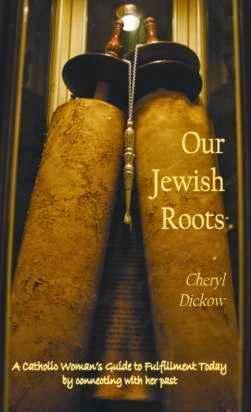
I'm having a lot of fun on the Christian Stack Exchange website. Today I came across a great question about oral law and wondering how it fit into a believer's life...I thought this excerpt from my book Our Jewish Roots would be helpful in clarifying a bit:


When HaShem (God) dictated the Torah to Moses, that Written Law, or Torah She’bi-khetav, made God’s laws known to His people.  This Truth, in all its glorious revelation, was to provide the Jewish people with instructions for daily living, how to celebrate their holidays, and the ways in which they should worship their Creator.  The Torah is also unambiguous on the behaviors that should be avoided and gives clear directions for atonement of sins committed.  Although the Written Law was considered complete, traditional Jewish teaching is that Moses also received a second set of laws called Torah She’bi-al peh: the Oral Law.  Accompanying the Written Law, the Oral Law gave the finer details on how the Written Law was to be fulfilled.  For instance, work was forbidden on the Sabbath but the people needed to know, more specifically, what constituted “work.” Thus, the need for the Oral Law.  This Oral Law, then, was given to Moses who gave it to Joshua. Joshua, then, told the Elders and the Elders then told the Prophets.  This transmission took place during the First Temple Era and spanned the approximate years of 950 to 586 B.C. 

 
By the time of the prophet Ezra, around 490 B.C. in the early second temple era, a group of Levites would be at the side of the scribe and priest giving an oral interpretation to what was being read from Torah She’bi-khetav.  It was also during this time of the Great Assembly that the oral law was collected and eventually, with the destruction of the second temple, put into an outline form known as the Mishnah.  The Mishnah was completed in 188 A.D. and was meant to provide a means for students of the Torah She’bi-khetav to better remember the holy book.  With time the need for more in-depth analysis of the Mishnah grew and resulted in a work of explanations called gemara.  Together, the gemara and the Mishnah make up what is called the Talmud. 


Catholics, too, have always believed that the bible is the word of God,   And, like the Chosen People, Catholics have relied on other sources to deepen their understanding of Scripture, knowing full well that nothing could ever add to Scripture or detract from Scripture but only shed light upon it.  We, as Catholics, believe and trust in the Holy Spirit to guide us, individually and collectively, in knowing God fully through His word.  Indeed, the Church, being guided by the Spirit, existed before the New Testament and had to rely on the oral transmission of the life of Christ before the Holy Spirit guided different people to record these accounts.  And then, again, the Holy Spirit was relied upon to gather and determine which works would become the New Testament.


Catholics believe that the Holy Spirit has been at work in the development of both the New Testament and in its teaching.  Like our Jewish ancestors, we recognize that God, through His Spirit, deems certain people more capable of this task than others.  This isn’t to say that the average lay Catholic does not have an informed opinion about Scripture but that we look to the Magisterium as the final authority.  We do, we should, and we do well to diligently study Scripture. 


In the early years of the Church, local communities were each led by a bishop whose job it was to give a faithful, and Spirit led, transmission of Christ’s life and His work. Along with passing on the faith, Bishops were expected to defend it and work towards the unity that Christ intended.  Today, lay Catholics continue to delve into the Word of God, learning and exploring the holy writings that intimately connect us to our Creator.  But Catholics also recognize the role that the Pope and Bishops play in edifying, for us, the Word of God.  We are blessed to turn to papal encyclicals, the Catechism, and numerous letters and documents that cover a vast array of topics from abortion to family matters to work to war.  Just like the Jewish people turn to the Talmud to deepen their understanding of Torah, we turn to these sources with the same intention.  Believing that Christ did not leave us bereft, we have trusted in the Spirit’s guidance of our Magisterium and will continue to do so in the millennia ahead as we eagerly await His return.


Monday, April 21, 2014

Frozen Footprints by Therese Heckenkamp


When I thumbed through my newly arrived, autographed copy of Frozen Footprints (thank you, Therese Heckenkamp!), I was excited to see the book that was going to be one of my “summer readers.” I had no intention of reading it upon its arrival as I was knee-deep in a few editing projects and really did not have the time. Mostly I wanted to stoke my anticipation which, for me, is always part of the excitement of lining up books to read.


I read the first sentence and could not stop.


One sentence and I was hooked.
 

So, I sat and read and pushed my editing projects from my thoughts since I didn’t want them crowding out the sheer pleasure I was finding in Heckenkamp’s book.


Frozen Footprints is the story of 18 year old twin siblings Charlene and Max Perigard who have spent the better part of their years under their wealthy grandfather’s thumb. Sure, they drive nice cars and have lots of goodies, but still there is a sadness in their lives that makes the reader understand that money really isn’t everything. All this comes out without the author getting preachy or high-and-mighty. (Good stuff.)


Being quite in sync with her twin, Charlene is a lone voice of concern about Max’s disappearance. Try as she might, though, no one will listen and take her concerns seriously. Thus, she finds herself in the midst of a very real, quite harrowing kidnapping saga.


Heckenkamp’s descriptions of scenes, events, and feelings weaves a great tale—one that will keep you turning pages long after you should have closed the book and gotten back to your work obligations. LOL! Never overt, Heckenkamp has used the story of the perils of Charlene and Max to bring an interesting and believable aspect of the faith into the dialogue between the main characters and even in a particularly chilling scene (sorry, you’ll have to read it to see what scene I am referring to).

 
With my editing projects patiently waiting for completion, I have learned that while another of Heckenkamp’s books is beckoning to me, I will not—I refuse to—open Past Suspicion and read even one sentence until my projects are complete. Talk about incentive!


If you want to get a jump start on your summer reading list, you really do want a copy of Frozen Footprints by Therese Heckenkamp—but I can’t promise that by the time summer rolls around you won’t be needing another book!


Wednesday, April 9, 2014

A Mary Garden: A Great Mother-Daughter Spring Activity!


It is a Catholic tradition to acknowledge and honor the unselfish and holy life of the Blessed Virgin Mary. One way of doing that is to plant a Mary Garden.

In the Middle Ages, missionaries and travelers spread stories across Europe about flowers named after Mary and various times of her life. Mary Gardens that featured these flowers became popular there, and later the tradition made its way to America. Around 1932 it is believed that the first Mary Garden in the United States was constructed on the grounds of St. Joseph's Church in the Woods on Cape Cod.

Now, many flowers that symbolize the name of Mary grace gardens throughout this country. If you, too, would like to honor our Blessed Mother through flowers, perhaps you would like to create your own special garden spot that showcases plants that carry her name. The center focus of the garden is a statue of Our Blessed Lady. The size of the garden does not matter. In fact, people with limited space can use a small area and a few select flowers to surround their statue. If you are an apartment dweller, you can set up your Marian Garden in a window box or even use a small statue with a single flowering plant. Reflecting on Marian flowers can be a perfect starting point for meditating on the life of Christ through Mary.

To help set up a Marian Garden, flowers and their meanings are listed below. This list is far from complete but should give you enough information to begin.

1. Lily: Legend tells us that the Angel Gabriel held a lily in his hands when he came to tell Mary that she was chosen to be the mother of the Savior. Lilies are often depicted in pictures of Mary as an indication of purity and grace.

2. Columbine: This flower is often called Our Lady's Slipper. Legend says that this flower sprang from the earth where Mary's feet stepped when she was on her way to visit Elizabeth.

3. Rose: The rose symbolizes Mary as the Queen of Heaven. The red rose represents sorrow. The white rose shows joy, and the yellow rose stands for the honor bestowed upon Mary.

4. Violet: The violet is a symbol of modesty and simplicity; humble acceptance to the words from the angel Gabriel...."Let it be done unto me according to Your will."

5. Carnation: Legend says that the carnation bloomed on the night of Jesus' birth; a sign of Mary's joy at the Child's birth.

6. Oxeye Daisy It is said that when the wise men reached Bethlehem they looked for a further sign to guide them to the new king. King Melchior saw a white and gold flower and knew which building to enter.

7. Star of Bethlehem: The shape of the flower is said to resemble the star that the Magi followed to find the Christ Child.

8. Snowdrop: The snowdrop is said to have bloomed in February when Mary took Jesus to the temple to present him to God.

9. Rosemary It is believed that Mary hung the linens of the Holy Child on the rosemary bush to dry. Afterwards, the bush carried a sweet aroma.

10. Forget-me-not The tiny blue flowers of this plant represent Mary's eyes.

11. Meadow Cress: This plant is called Our Lady's Smock. It stands for the fine linens made by Mary's hands. It is said that Mary learned to weave as a young girl.

12. Lavender This fragrant plant represents purity, cleanliness and virtue – Mary’s spotlessness and chastity.

13. Marigold: Early Christians placed marigolds around statues of Mary in place of coins calling them Mary's gold.

14. Bluebells: These bell-shaped flowers resemble tiny thimbles and represent Our Lady's working hands. They were often called Our Lady's Thimbles.

15. Speedwell: This plant is also known as Mary's Resting Place. A legend tells that its blossoms marked each spot where the Blessed Mother rested during the flight into Egypt.

(This excerpt is reprinted with permission from All Things Girl: Truth for Teens, 2014 release)

Saturday, April 5, 2014

The Company We Keep!

If we are known by the company we keep, then hats off to one of my favorite authors--Laura Pearl--for the company she is keeping on Amazon!

Check it out:

Customers who bought Finding Grace by Laura Pearl also bought The Ear of the Heart by Mother Dolores Hart; Come My Beloved by Ellen Gable Hrkach; Past Suspicion by Therese Heckenkamp; and Frozen Footprints also by Therese Heckenkamp (which I am currently reading and loving!).

Congratulations, Laura!

check out Laura's blog at: http://mumsie2five.blogspot.com/

or follow Laura on Twitter @Finding_Grace_