Showing posts with label Jewish Roots. Show all posts

Thursday, May 22, 2014

Oral Law

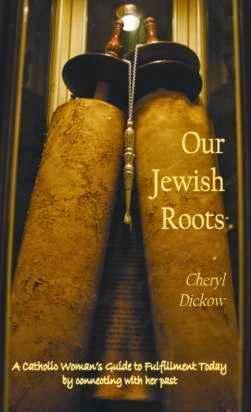
I'm having a lot of fun on the Christian Stack Exchange website. Today I came across a great question about oral law and wondering how it fit into a believer's life...I thought this excerpt from my book Our Jewish Roots would be helpful in clarifying a bit:


When HaShem (God) dictated the Torah to Moses, that Written Law, or Torah She’bi-khetav, made God’s laws known to His people.  This Truth, in all its glorious revelation, was to provide the Jewish people with instructions for daily living, how to celebrate their holidays, and the ways in which they should worship their Creator.  The Torah is also unambiguous on the behaviors that should be avoided and gives clear directions for atonement of sins committed.  Although the Written Law was considered complete, traditional Jewish teaching is that Moses also received a second set of laws called Torah She’bi-al peh: the Oral Law.  Accompanying the Written Law, the Oral Law gave the finer details on how the Written Law was to be fulfilled.  For instance, work was forbidden on the Sabbath but the people needed to know, more specifically, what constituted “work.” Thus, the need for the Oral Law.  This Oral Law, then, was given to Moses who gave it to Joshua. Joshua, then, told the Elders and the Elders then told the Prophets.  This transmission took place during the First Temple Era and spanned the approximate years of 950 to 586 B.C. 

 
By the time of the prophet Ezra, around 490 B.C. in the early second temple era, a group of Levites would be at the side of the scribe and priest giving an oral interpretation to what was being read from Torah She’bi-khetav.  It was also during this time of the Great Assembly that the oral law was collected and eventually, with the destruction of the second temple, put into an outline form known as the Mishnah.  The Mishnah was completed in 188 A.D. and was meant to provide a means for students of the Torah She’bi-khetav to better remember the holy book.  With time the need for more in-depth analysis of the Mishnah grew and resulted in a work of explanations called gemara.  Together, the gemara and the Mishnah make up what is called the Talmud. 


Catholics, too, have always believed that the bible is the word of God,   And, like the Chosen People, Catholics have relied on other sources to deepen their understanding of Scripture, knowing full well that nothing could ever add to Scripture or detract from Scripture but only shed light upon it.  We, as Catholics, believe and trust in the Holy Spirit to guide us, individually and collectively, in knowing God fully through His word.  Indeed, the Church, being guided by the Spirit, existed before the New Testament and had to rely on the oral transmission of the life of Christ before the Holy Spirit guided different people to record these accounts.  And then, again, the Holy Spirit was relied upon to gather and determine which works would become the New Testament.


Catholics believe that the Holy Spirit has been at work in the development of both the New Testament and in its teaching.  Like our Jewish ancestors, we recognize that God, through His Spirit, deems certain people more capable of this task than others.  This isn’t to say that the average lay Catholic does not have an informed opinion about Scripture but that we look to the Magisterium as the final authority.  We do, we should, and we do well to diligently study Scripture. 


In the early years of the Church, local communities were each led by a bishop whose job it was to give a faithful, and Spirit led, transmission of Christ’s life and His work. Along with passing on the faith, Bishops were expected to defend it and work towards the unity that Christ intended.  Today, lay Catholics continue to delve into the Word of God, learning and exploring the holy writings that intimately connect us to our Creator.  But Catholics also recognize the role that the Pope and Bishops play in edifying, for us, the Word of God.  We are blessed to turn to papal encyclicals, the Catechism, and numerous letters and documents that cover a vast array of topics from abortion to family matters to work to war.  Just like the Jewish people turn to the Talmud to deepen their understanding of Torah, we turn to these sources with the same intention.  Believing that Christ did not leave us bereft, we have trusted in the Spirit’s guidance of our Magisterium and will continue to do so in the millennia ahead as we eagerly await His return.


Wednesday, October 9, 2013

What Evangelization REALLY Looks Like


My friend and I purchased tickets to a local event in which our Detroit Archbishop Allen Vigneron was engaging in a dialogue with Rabbi Joseph Krakoff from the Shaarey Zedek congregation in Southfield, Michigan on the topic of Genesis.

The event—which was co-sponsored by the Archdiocese of Detroit and the Jewish Federation—took place at the Maple Theatres in Bloomfield, Michigan on a humid Sunday afternoon. Fortunately, seating at the Maple Theatres is awesome: it is roomy and comfortable and really ideal for just such an occasion.  

Sherry and I made an outing out of the whole thing and had a late lunch at a local deli before heading over to the venue. We were greeted by surprisingly long lines that immediately created a sense of excitement and anticipation. Everyone just knew this was going to be “something.” The damp, muggy afternoon air didn’t hinder anyone’s mood.

It felt rather exhilarating and, well, sort of heavenly.

The theatre holds a few hundred people and it was sold out—or if not sold out, just about sold out. Archbishop Vigneron and Rabbi Krakoff were on the stage when we arrived with a few minutes to spare before starting time. The lighting was low with a perfectly placed focus on the table at which both men sat. As the crowd meandered in, the men were clearly engaged in a quiet conversation that seemed respectful, comfortable, and amiable. The microphones were not yet on but at one point we heard laughter erupt and somehow knew that this was going to be a blessed event.

And anointed it was.

Rabbi Krakoff guided the format which included, for the most part, a bit of reading from Genesis, a Jewish perspective on particular passages and then an opportunity for Archbishop Vigneron to speak to the same verses from a Catholic perspective.

The men discussed the fall of Adam and Eve, the duplicity of the snake in the garden, marriage, the soul, and life after death—among other things.

It was thrilling to see the connections between the Jewish and Catholic faiths and interesting to see where they diverged. Both men are to be credited for the ways in which they handled the differences. For instance, Archbishop Vigneron perfectly articulated original sin while Rabbi Krakoff explained that Jews believe a child is born “neutral.” Archbishop Vigneron explained that Catholics believe in one life and that a soul and body are created together and ultimately join together after the resurrection while Rabbi Krakoff explained the Jewish understanding of life after death that included possible reincarnation but no Hell.

I was incredibly proud of my Archbishop when he kindly and with great sincerity mentioned gratitude for the ways in which our Catholic faith arises from the Jewish faith—particularly the mention of us being “grafted” in and the ways in which the New Testament invokes the Old Testament.

It was love incarnate.

After about an hour of discussion, both men took questions via note cards given to the audience members. For the most part, it seems like the questions were directed to Archbishop Vigneron. Ultimately, Vigneron fielded questions about divorce, baptism, angels, and Satan with ease and intelligence.

I’ve heard and read a lot about the “new evangelization” and yet have seen tremendous hate on the internet (and intolerance in all forms of media) under the guise of this “new evangelization” as people of faith verbally accost unbelievers and even one another. In some sad ways this new evangelization looks like e-Crusades. (Have we learned nothing from history?) It has left such an ugly taste in my mouth that I’ve begun to see “evangelization” as a dirty word.

This event changed all that.

Archbishop Vigneron and Rabbi Krakoff sat on stage and represented the very best of men of God. They were kind, charitable, tolerant, and knowledgeable as they opened their hearts to one another and to us, their audience. As Rabbi Krakoff offered in his closing remarks (I’m paraphrasing here): It isn’t about needing to agree on all things but needing to talk together. I couldn’t help but feel what real evangelization is all about: love.

It is clear that so much more is accomplished through loving dialogue than through the venom that is spewed as one person tries to convince another of what is “right.” Whatever knowledge we each took home that night, my prayer is that—more than anything—we each experienced an increase of love and tolerance in our hearts for our fellow man based upon the examples witnessed to us by Vigneron and Krakoff.


Thursday, August 29, 2013

Journey Home Episode

I really was blessed by my time speaking with Marcus Grodi on Journey Home. He is a very gracious man and has a very kind, welcoming, and hospitable group of people at the Coming Home Network. Please consider joining Marcus and I and feel free to email me any questions you may have about anything we talked about. I've been so touched by the kind emails I have received since the airing of the show.

http://www.youtube.com/watch?v=S_IJSeaAcJc


Cheryl Dickow
www.BezalelBooks.com